 e11bd6e893
Viktor asked to verify free ports on the garage switch (192.168.1.6)
before finalizing. Logging into it showed it is NOT the TL-SG105PE from
the plan but a pre-existing non-PoE TL-SG105E with 4 of 5 ports in use
(apartment uplink, R730 LAN1, 4G router, UPS) - the single-shared-switch
port-VLAN design written earlier today was based on conflating the two
devices. Corrected: the new TL-SG105PE carries ONLY camera + eno2
uplink (mgmt 10.0.30.6 inside the segment), the old switch is untouched,
and no VLAN config exists anywhere. ADR, topology SVG and networking.md
updated to match.

Co-Authored-By: Claude Fable 5 <noreply@anthropic.com>
3.1 KiB
CCTV segment on a dedicated pfSense leg, not an 802.1Q trunk
Status: accepted (2026-07-02)
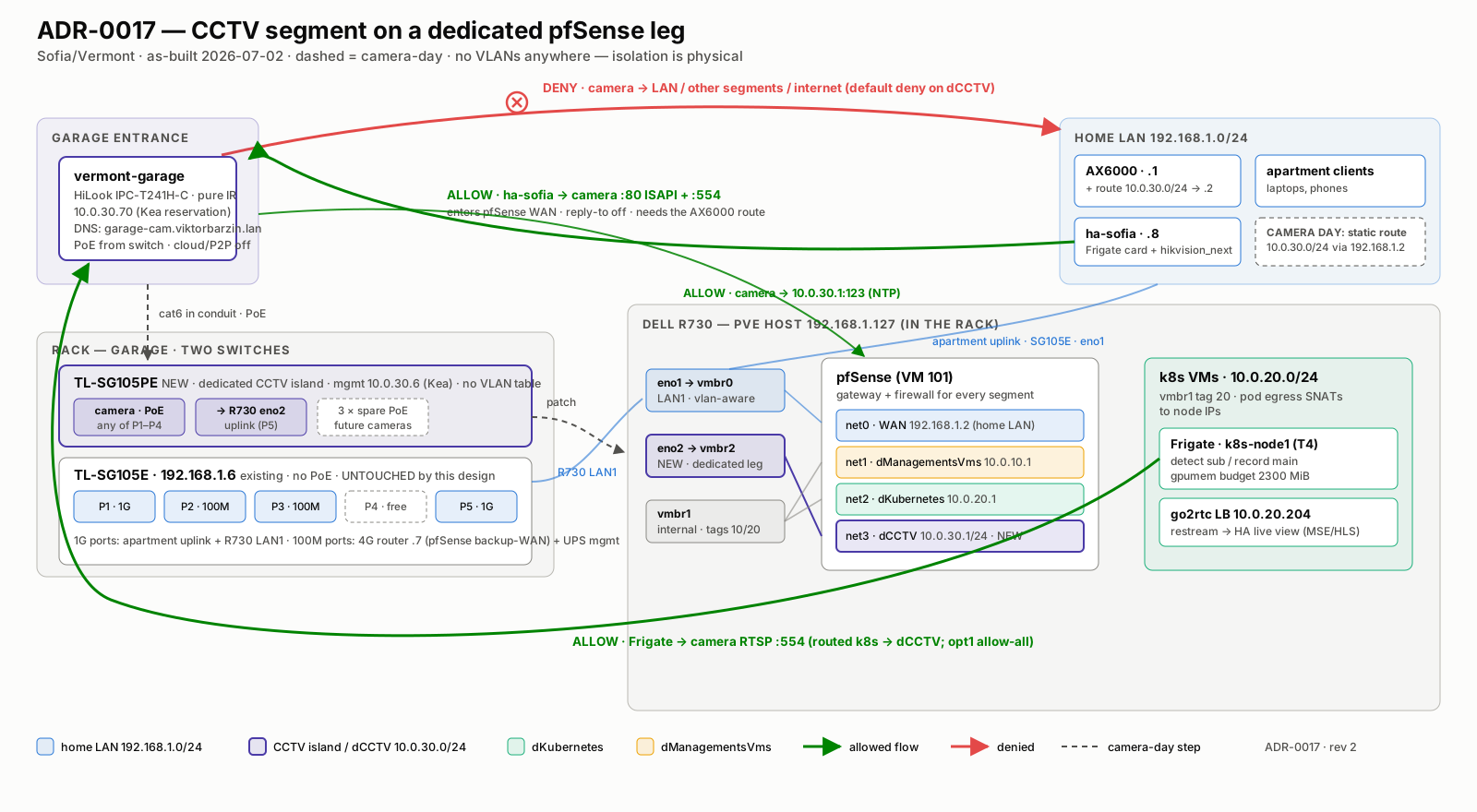
The first owned camera at the Sofia/Vermont site (vermont-garage, HiLook
IPC-T241H-C at the garage entrance) needs to be network-isolated: its cable is
physically exposed outside the apartment, so anything plugged into that cable
must land in a segment that can reach nothing. The original design doc
(NAS: Emo shared/Claude shared/garage-camera/) called for an "802.1Q trunk
to pfSense" — but nothing in this network terminates dot1q on pfSense; the
site idiom is one vlan-aware Proxmox bridge → one tagged VM NIC → one clean
untagged pfSense interface per segment.
Decision: the CCTV segment (dCCTV, 10.0.30.1/24) rides a dedicated
physical leg — R730 eno2 (spare) → new bridge vmbr2 → pfSense net3
(vtnet3), untagged end-to-end. The new TL-SG105PE PoE switch is a dedicated
CCTV island: camera in a PoE port, one port patched to eno2, no VLAN table
at all, mgmt IP inside the segment (10.0.30.6 via Kea). The existing garage
TL-SG105E (192.168.1.6 — apartment uplink, R730 LAN1, 4G router 192.168.1.7,
UPS mgmt; exactly one free port) is untouched — it has no PoE and no spare
port pair, which is also why the two roles cannot share one switch.
Cameras are untrusted: default-deny on dCCTV with a single
NTP-to-gateway exception; Frigate (k8s) pulls RTSP in; ha-sofia (192.168.1.8)
may reach ISAPI/RTSP directly; home-LAN clients route in via an AX6000 static
route (10.0.30.0/24 via 192.168.1.2). 10.0.30.0/24 is deliberately NOT in the
10.0.20.0/22 trusted source-IP allowlist.
Considered options
- 802.1Q tag over the existing LAN path (eno1/vmbr0) — rejected: vmbr0 is
vlan-aware with
bridge-vids 2-4094, so ANY device on the home LAN could inject tagged frames straight into the camera segment (defeats the cable-tap threat model); tag-passing through the unmanaged SW1 is undefined; and it reconfigures the live bridge carrying the host IP and pfSense WAN. - AX6000 as the camera gateway — rejected earlier in the design (consumer router, no inter-VLAN firewall).
Consequences
- eno2 is consumed; eno3/eno4 remain the last spare NICs on the R730.
- Two Easy Smart switches live in the rack: the OLD TL-SG105E at 192.168.1.6 remains the load-bearing shared one (apartment uplink, R730 LAN1, pfSense's backup-WAN path via the 4G router, UPS mgmt — one port free); the NEW TL-SG105PE carries only CCTV. The Easy Smart mgmt-answers-on-every-port quirk is therefore contained: the PE's mgmt UI is only L2-adjacent to cameras, and pfSense still gates all L3.
- Adding a future camera = one free PoE port on the PE + a Kea reservation; no pfSense/PVE/VLAN work.
- 2026-07-02 correction: an earlier revision of this ADR described ONE shared PE switch with a port-based VLAN split — written before discovering the live 192.168.1.6 device is a separate, older non-PoE TL-SG105E. No VLAN table exists anywhere in the final design.
- Frigate's ADR-0016 VRAM budget was bumped 2000 → 2300 MiB for the extra NVDEC stream.