 f5187806f9
Viktor wants the traffic-flow view as a colored excalidraw instead of
the ASCII block (which was the only thing rendering after the earlier
VLAN-tagging SVG commit failed to push — a locally-masked non-fast-
forward this session, not a merge clobber). Ships both the editable
.excalidraw scene and a hand-drawn-style SVG export embedded in the
Traffic-on-the-trunk section: two lanes showing where the 802.1Q tag
is added, carried (only P5<->vmbr0) and stripped, L2 membership drops
vs L3 firewall verdicts.

Co-Authored-By: Claude Fable 5 <noreply@anthropic.com>
5.8 KiB
CCTV segment: dedicated pfSense interface, VLAN-30 trunk on the LAN1 cable
Status: accepted (2026-07-02, rev 3 — single-switch)
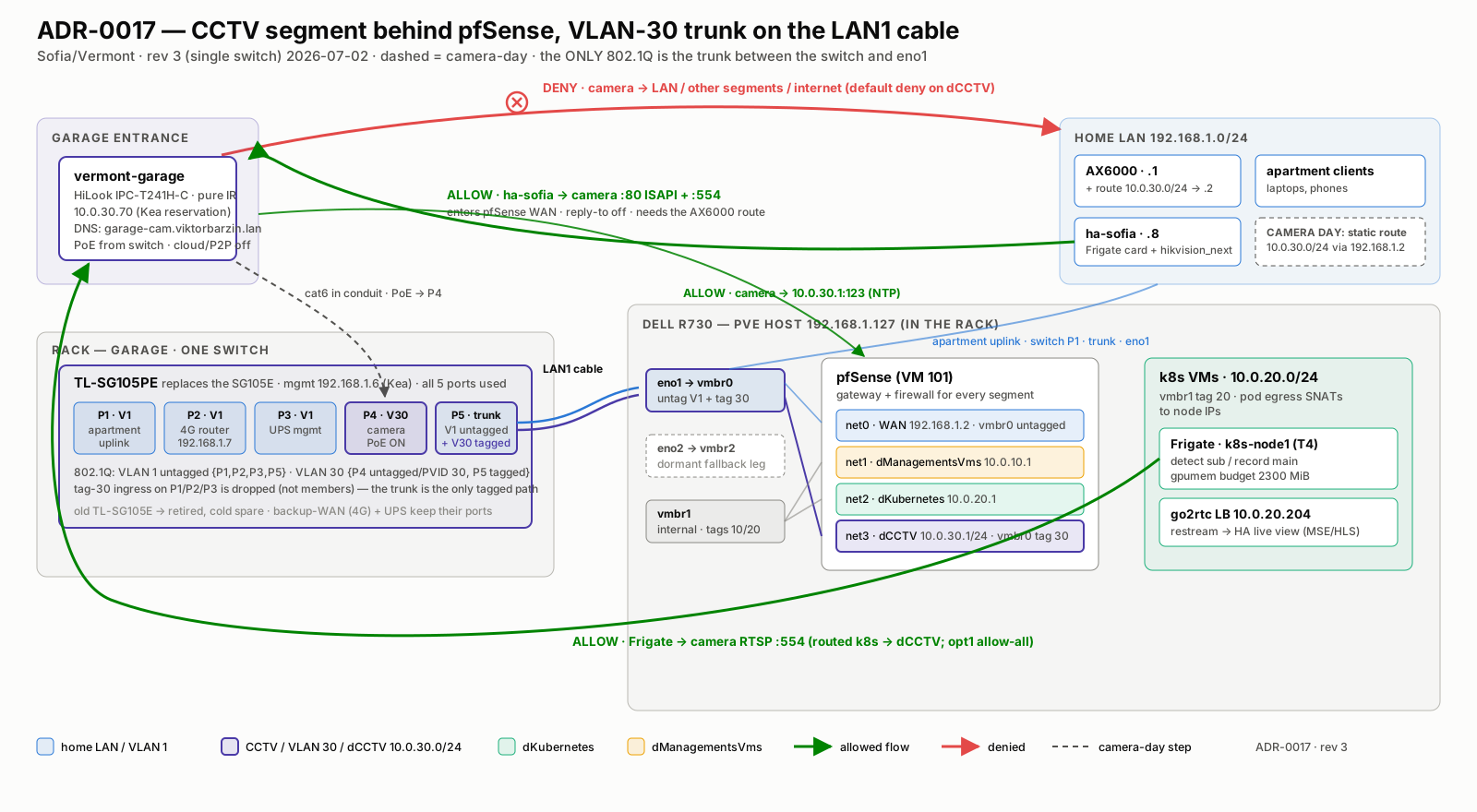
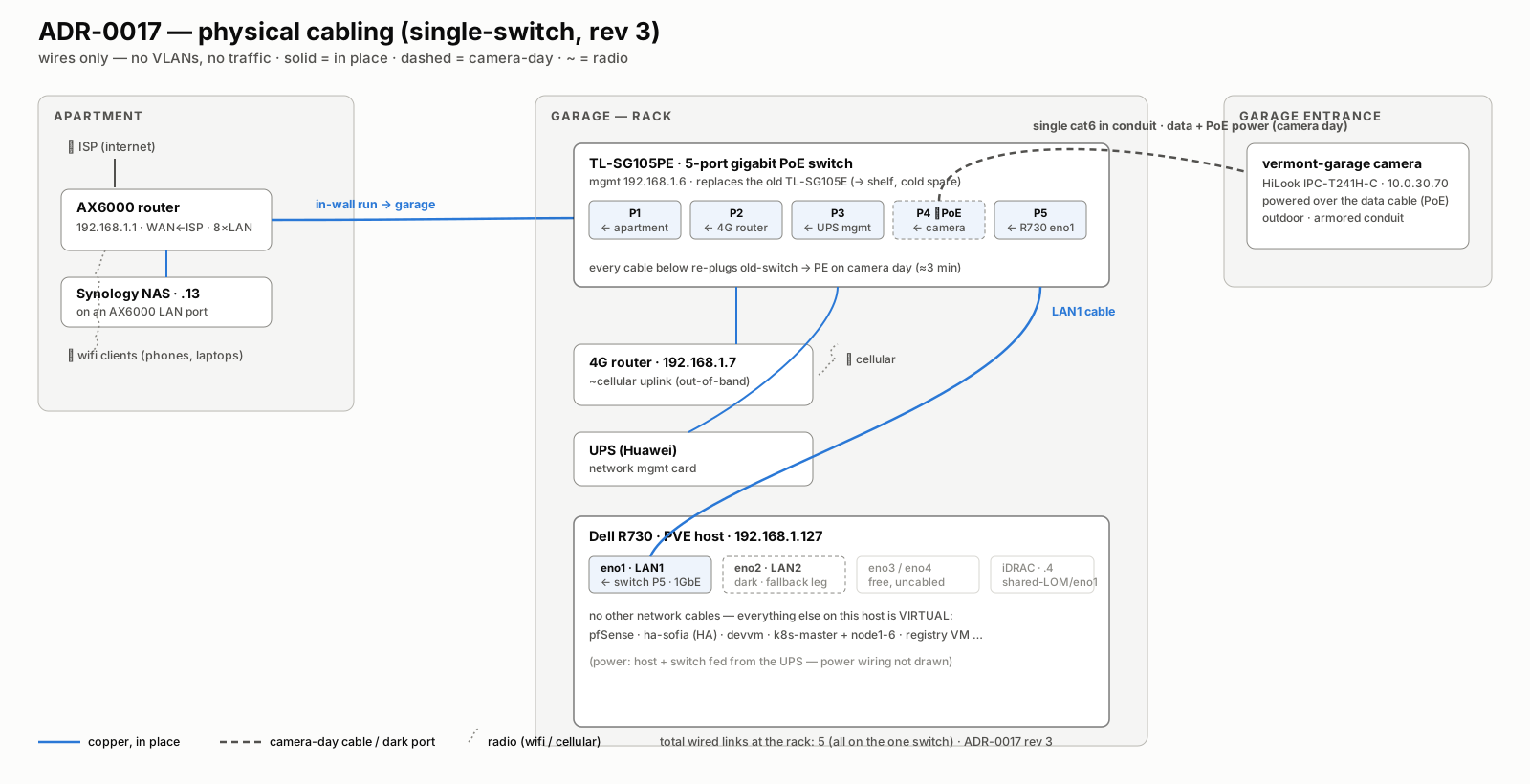
The first owned camera at the Sofia/Vermont site (vermont-garage, HiLook
IPC-T241H-C at the garage entrance) needs to be network-isolated: its cable is
physically exposed outside the apartment, so anything plugged into that cable
must land in a segment that can reach nothing. The original design doc
(NAS: Emo shared/Claude shared/garage-camera/) called for an "802.1Q trunk
to pfSense" — but nothing in this network terminates dot1q on pfSense; the
site idiom is one vlan-aware Proxmox bridge → one tagged VM NIC → one clean
untagged pfSense interface per segment.
Decision (rev 3): ONE switch — the new TL-SG105PE replaces the old
garage TL-SG105E (Viktor prefers not running two switches; retired unit
becomes a cold spare, its 192.168.1.6 mgmt IP passes to the PE). Five ports,
all used: apartment uplink, 4G router 192.168.1.7, UPS mgmt (all untagged
VLAN 1), the camera (untagged VLAN 30, PoE), and the trunk to R730 eno1
carrying home LAN untagged + CCTV tagged 30 over the existing LAN1 cable.
pfSense net3 (vtnet3) sits on vmbr0 with tag=30 — exactly the site
idiom used for dManagementsVms/dKubernetes (bridge-level tag → clean untagged
vNIC; pfSense still terminates no dot1q itself). The earlier dedicated
eno2/vmbr2 leg is kept dormant as a fallback (rev 2 wired it; moving
net3 back to vmbr2 restores pure physical isolation in one qm set).
This narrows the earlier 802.1Q objection rather than contradicting it: the
rejection assumed unmanaged switches, where any LAN device could inject
tagged frames; with the managed PE as the only device on eno1, VLAN-30
membership is {camera port, trunk port} only, so tag-30 ingress from every
other port — and from the exposed camera cable — is dropped or contained.
Cameras are untrusted: default-deny on dCCTV with a single
NTP-to-gateway exception; Frigate (k8s) pulls RTSP in; ha-sofia (192.168.1.8)
may reach ISAPI/RTSP directly; home-LAN clients route in via an AX6000 static
route (10.0.30.0/24 via 192.168.1.2). 10.0.30.0/24 is deliberately NOT in the
10.0.20.0/22 trusted source-IP allowlist.
Traffic on the trunk — how one cable carries two networks
The LAN1 cable is shared, but the two networks on it diverge at vmbr0
(the vlan-aware bridge on the PVE host), and only ONE of them ever touches
pfSense:
- Untagged (VLAN 1, home LAN) is plain L2 bridging: vmbr0 switches it
between the trunk, the host's own IP (192.168.1.127) and pfSense
net0— where pfSense sits as an ordinary LAN client (WAN 192.168.1.2). The home LAN's gateway is and remains the AX6000; home-LAN traffic never transits pfSense. Consequently a pfSense (or R730 VM-level) outage does not affect the home LAN, and the apartment ↔ 4G-router ↔ UPS paths don't even leave the switch (P1/P2/P3 bridge internally), so out-of-band recovery via the 4G router survives the whole rack being down. - Tagged 30 (CCTV) has exactly one possible landing: vmbr0 delivers
VID 30 only to pfSense
net3(dCCTV, 10.0.30.1), which is the camera segment's gateway, firewall and sole exit. "Camera → AX6000 → internet" is impossible by construction, not merely by firewall rule. - pfSense forwards upstream only its own segments (10.0.10/20/30), NATed out of its WAN toward the AX6000. Load-wise the trunk gained only the camera's ~8 Mbps — it already carried all rack-bound home-LAN traffic.
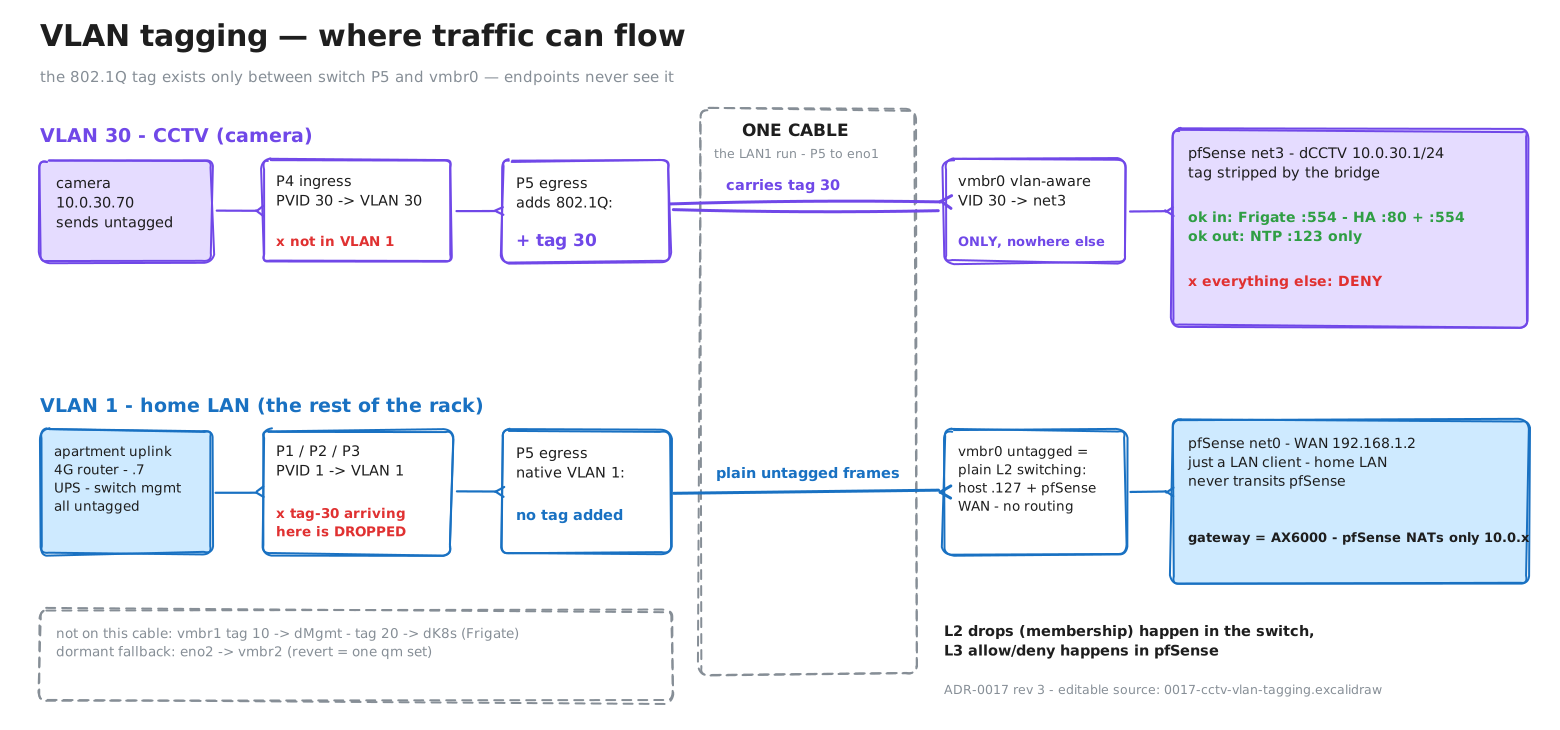
(editable source: 0017-cctv-vlan-tagging.excalidraw — open it in excalidraw to tweak)
Considered options
- 802.1Q over the LAN path behind an UNMANAGED switch (the original plan
read this way) — rejected: any LAN device could inject tagged frames into
vmbr0 (
bridge-vids 2-4094) and tag-passing through a dumb switch is undefined. Rev 3 adopts the tagged path ONLY because the managed PE now polices VLAN-30 membership at the single entry point to eno1; no bridge reconfiguration was needed (vmbr0 was already vlan-aware). - Dedicated physical leg (eno2 → vmbr2 → net3), one switch per role (rev 1/2 as-built) — superseded by rev 3: it forced either a second switch (6 connections vs 5 ports once the PE also replaced the old switch) or new hardware. Strongest isolation of all options; kept dormant as the fallback.
- AX6000 as the camera gateway — rejected earlier in the design (consumer router, no inter-VLAN firewall).
Consequences
- The switch is now single-point and load-bearing for everything in the rack (apartment uplink, pfSense backup-WAN via 4G, UPS mgmt, CCTV) AND its VLAN table + mgmt password are part of the isolation boundary — the Easy Smart mgmt UI answers on every port, so the password is the gate between a compromised camera and the switch config. All 5 ports are consumed: the next camera forces an 8-port PoE upgrade (the wiring plan already fits it).
eno2/vmbr2stay cabled-ready but dormant (fallback to rev 2's physical leg); eno3/eno4 remain free.- The old TL-SG105E is retired to cold spare; the PE inherits 192.168.1.6 (Kea reservation by MAC).
- Revision history (all 2026-07-02): rev 1 assumed one shared PE with a port-VLAN split (conflated the two devices); rev 2 split into two switches after inspecting 192.168.1.6 (old non-PoE SG105E, 4/5 ports used); rev 3 consolidated back to one switch — the PE replacing the SG105E — per Viktor's preference, moving CCTV onto a managed tagged trunk.
- Frigate's ADR-0016 VRAM budget was bumped 2000 → 2300 MiB for the extra NVDEC stream.