 be80ef23bb
Viktor prefers not running two switches, so the TL-SG105PE takes over
all rack duties (apartment uplink, 4G, UPS, camera PoE) and the CCTV
segment moves onto a managed tagged trunk over the existing LAN1 cable:
pfSense net3 re-pointed from vmbr2 to vmbr0 tag=30 (applied live; same
MAC so vtnet3/dCCTV survived untouched). This is safe where the original
802.1Q rejection was not, because the managed switch is the only device
on eno1 and polices VLAN-30 membership. eno2/vmbr2 kept dormant as the
documented fallback. Old SG105E retires to cold spare; PE inherits
192.168.1.6. Glossary Segment term updated (all three segments are now
bridge-tags feeding untagged pfSense vNICs).

Co-Authored-By: Claude Fable 5 <noreply@anthropic.com>
4.3 KiB
CCTV segment: dedicated pfSense interface, VLAN-30 trunk on the LAN1 cable
Status: accepted (2026-07-02, rev 3 — single-switch)
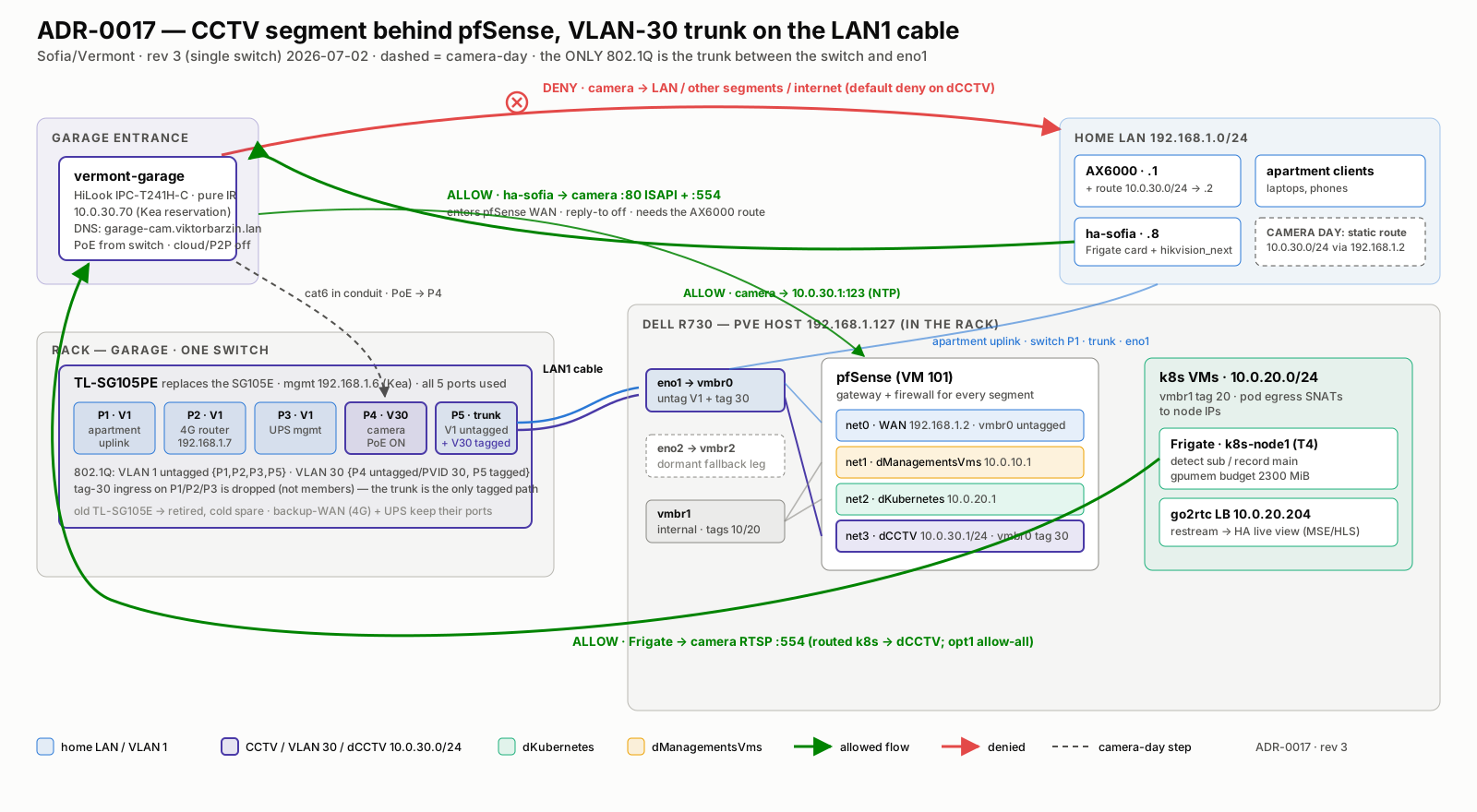
The first owned camera at the Sofia/Vermont site (vermont-garage, HiLook
IPC-T241H-C at the garage entrance) needs to be network-isolated: its cable is
physically exposed outside the apartment, so anything plugged into that cable
must land in a segment that can reach nothing. The original design doc
(NAS: Emo shared/Claude shared/garage-camera/) called for an "802.1Q trunk
to pfSense" — but nothing in this network terminates dot1q on pfSense; the
site idiom is one vlan-aware Proxmox bridge → one tagged VM NIC → one clean
untagged pfSense interface per segment.
Decision (rev 3): ONE switch — the new TL-SG105PE replaces the old
garage TL-SG105E (Viktor prefers not running two switches; retired unit
becomes a cold spare, its 192.168.1.6 mgmt IP passes to the PE). Five ports,
all used: apartment uplink, 4G router 192.168.1.7, UPS mgmt (all untagged
VLAN 1), the camera (untagged VLAN 30, PoE), and the trunk to R730 eno1
carrying home LAN untagged + CCTV tagged 30 over the existing LAN1 cable.
pfSense net3 (vtnet3) sits on vmbr0 with tag=30 — exactly the site
idiom used for dManagementsVms/dKubernetes (bridge-level tag → clean untagged
vNIC; pfSense still terminates no dot1q itself). The earlier dedicated
eno2/vmbr2 leg is kept dormant as a fallback (rev 2 wired it; moving
net3 back to vmbr2 restores pure physical isolation in one qm set).
This narrows the earlier 802.1Q objection rather than contradicting it: the
rejection assumed unmanaged switches, where any LAN device could inject
tagged frames; with the managed PE as the only device on eno1, VLAN-30
membership is {camera port, trunk port} only, so tag-30 ingress from every
other port — and from the exposed camera cable — is dropped or contained.
Cameras are untrusted: default-deny on dCCTV with a single
NTP-to-gateway exception; Frigate (k8s) pulls RTSP in; ha-sofia (192.168.1.8)
may reach ISAPI/RTSP directly; home-LAN clients route in via an AX6000 static
route (10.0.30.0/24 via 192.168.1.2). 10.0.30.0/24 is deliberately NOT in the
10.0.20.0/22 trusted source-IP allowlist.
Considered options
- 802.1Q over the LAN path behind an UNMANAGED switch (the original plan
read this way) — rejected: any LAN device could inject tagged frames into
vmbr0 (
bridge-vids 2-4094) and tag-passing through a dumb switch is undefined. Rev 3 adopts the tagged path ONLY because the managed PE now polices VLAN-30 membership at the single entry point to eno1; no bridge reconfiguration was needed (vmbr0 was already vlan-aware). - Dedicated physical leg (eno2 → vmbr2 → net3), one switch per role (rev 1/2 as-built) — superseded by rev 3: it forced either a second switch (6 connections vs 5 ports once the PE also replaced the old switch) or new hardware. Strongest isolation of all options; kept dormant as the fallback.
- AX6000 as the camera gateway — rejected earlier in the design (consumer router, no inter-VLAN firewall).
Consequences
- The switch is now single-point and load-bearing for everything in the rack (apartment uplink, pfSense backup-WAN via 4G, UPS mgmt, CCTV) AND its VLAN table + mgmt password are part of the isolation boundary — the Easy Smart mgmt UI answers on every port, so the password is the gate between a compromised camera and the switch config. All 5 ports are consumed: the next camera forces an 8-port PoE upgrade (the wiring plan already fits it).
eno2/vmbr2stay cabled-ready but dormant (fallback to rev 2's physical leg); eno3/eno4 remain free.- The old TL-SG105E is retired to cold spare; the PE inherits 192.168.1.6 (Kea reservation by MAC).
- Revision history (all 2026-07-02): rev 1 assumed one shared PE with a port-VLAN split (conflated the two devices); rev 2 split into two switches after inspecting 192.168.1.6 (old non-PoE SG105E, 4/5 ports used); rev 3 consolidated back to one switch — the PE replacing the SG105E — per Viktor's preference, moving CCTV onto a managed tagged trunk.
- Frigate's ADR-0016 VRAM budget was bumped 2000 → 2300 MiB for the extra NVDEC stream.